
Dessert Factory Idle
Supercent, Inc.Arcade
4.71.51K Reviews
- Version
- 8.8.0
- Installs
- 10.00M
- Age Rating
- Everyone
Screenshots
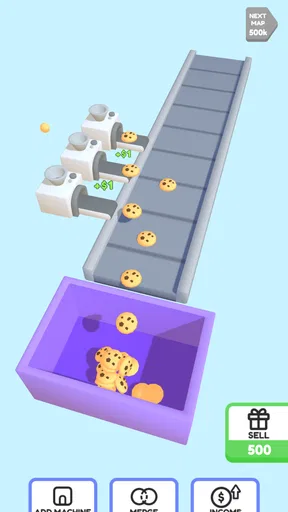
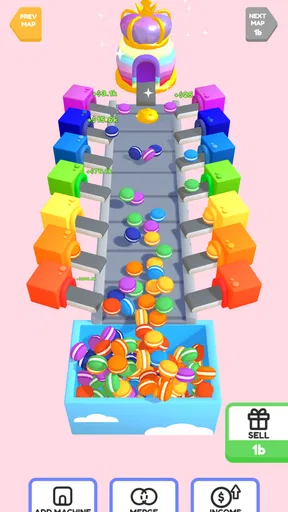


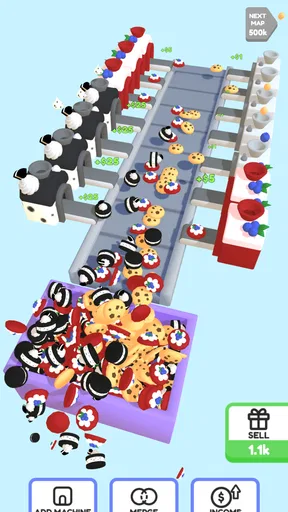
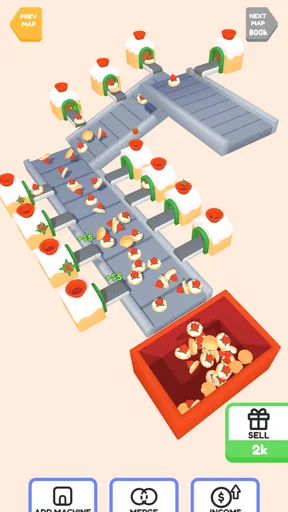
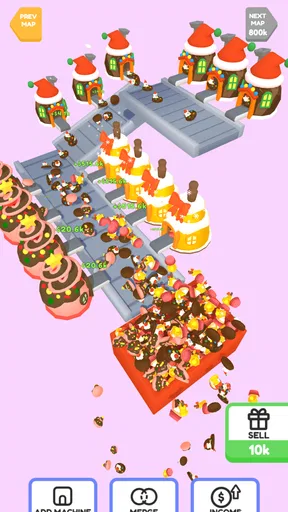

Our Review of Dessert Factory Idle
 Analysis by Appyee
I went into Dessert Factory Idle expecting a light arcade time-killer, and that is exactly where it fits best. Developed by Supercent, Inc., this free game turns cookie production into a simple idle routine: keep the dessert operation moving, watch the output grow, and make small decisions that help the factory feel more productive. It is easy to understand within a few moments, but the appeal comes from how naturally it fills short gaps in the day.
The game belongs to the arcade category, though it feels calmer than a reflex-heavy arcade title. There is no need to master complicated controls or memorize long combinations. Instead, the satisfaction comes from visible progress and the repeated rhythm of improving a cookie-making setup. I found it most enjoyable when I wanted something I could check briefly without committing to a long session.
Its audience is broad: the content rating is Everyone, and the game runs on Android devices using version 7.0 or later. That makes it accessible to people with older phones as well as users on newer hardware. The current version is 8.8.0, and the game has already attracted more than ten million installs, with an average rating of 4.7 from roughly eighty-two thousand ratings. Those figures suggest that its straightforward format has found a large audience, although popularity alone does not make an idle game suitable for everyone.
How the cookie factory feels during ordinary play
The first thing I noticed was the low barrier to entry. Dessert Factory Idle does not ask me to learn a complicated system before I can enjoy it. The central idea is immediately readable: build up a cookie dessert operation and keep the flow going. That clarity matters on a phone because I can open the game while waiting for transport, during a short break, or when I want a few minutes of harmless distraction.
The pace is intentionally gentle. This is not an arcade game built around rapid reactions, precise timing, or constant failure. Its speed comes from watching the factory develop rather than from moving quickly with my fingers. If you enjoy seeing a small operation become more capable over time, the gradual rhythm is pleasant. If you need instant action every second, the opening stretch may feel too quiet.
I would describe the progression as a series of small rewards rather than one dramatic challenge. Each improvement makes the next check-in feel worthwhile, but the game does not rely on a single spectacular moment to hold attention. That makes it suitable for casual play, especially for someone who likes management-flavored games but does not want a complex simulation.
One useful habit is to treat each visit as a short planning session instead of tapping without thinking. I found that the game feels more satisfying when I first look at what has changed, decide what deserves attention, and then leave it running until I feel like checking again. That approach reduces the sense of repetition and gives the idle structure a clearer purpose.
What happens when progress starts moving faster
As the factory develops, the visual sense of activity becomes more important than any one interaction. A growing dessert operation is easy to understand at a glance, so I do not need to stop and decode a complicated interface every time I return. That is one of the strongest practical qualities here: the game respects short attention spans.
There is also a useful trade-off in the way the game handles motivation. Because the core loop is uncomplicated, I can play while listening to something else or taking a quick break. At the same time, the lack of deep moment-to-moment variety means that long uninterrupted sessions may become less engaging than short visits. I would not choose it as my main game for an evening when I want a demanding challenge.
The cookie theme gives the routine a warmer personality than a generic production game. The focus on desserts makes the factory feel playful rather than industrial, and the visual idea is easy to grasp even if someone has never played an idle title before. Still, the charm depends on enjoying incremental progress. Players who prefer story, exploration, competitive matches, or intricate optimization will probably find the loop too narrow.
How it handles busy moments
The most demanding use case is not a difficult level; it is extended checking. When I return repeatedly, the game needs to make progress understandable without forcing me to rebuild my mental picture of the factory every time. That is where a simple idle design helps. The basic objective remains clear, so the game does not become mentally expensive during a busy day.
I would use it differently depending on my available time. During a short break, I would make a quick adjustment and close it. During a longer quiet period, I would spend more time watching the operation and deciding how to make the next stage feel more productive. This flexibility is more valuable than it sounds because many mobile games are either too demanding for brief sessions or too shallow to reward returning.
There is a small risk of turning the game into a repetitive checklist. If I open it only to collect progress and immediately leave, the experience can feel mechanical. My solution is to set a personal stopping point: make one meaningful improvement, observe the result, and stop rather than continuing automatically. That keeps the game from becoming background noise.
In-app purchases range from $0.99 to $6.99 per item. I would treat them as optional spending rather than part of the basic reason to install the game. The free entry is important because the core appeal is its accessible idle loop, and anyone uncomfortable with purchase prompts should decide in advance whether they are willing to ignore optional offers. The game is better suited to players who can enjoy gradual progress without feeling pressured to accelerate it.
Stability and the everyday reliability question
For an idle game, reliability is closely tied to trust. I want to know that a quick visit will feel consistent and that the game will remain easy to resume after I put my phone away. Dessert Factory Idle benefits from its uncomplicated format because there are fewer layers to manage than in a large online role-playing game or a detailed city builder. That makes it feel like a safer choice for casual sessions.
Even so, I would not confuse a simple design with a guarantee that every device will behave identically. Android phones differ widely in age, memory, screen size, and background activity. A newer device is more likely to provide a comfortable experience when several apps are open, while an older phone may need more patience when switching back and forth. The sensible approach is to keep expectations aligned with the device rather than assuming that every Android installation will feel the same.
Recovery is another reason I prefer short, deliberate sessions. If I leave the game and return later, I can quickly reorient myself because the premise is so clear. I do not have to remember a long quest chain or a complicated battle setup. That makes it a forgiving game to keep installed alongside other apps, particularly for people who play in scattered moments.
I also think the version number matters mainly as a sign that the game is an established product rather than a brand-new experiment. The current release, 8.8.0, gives the title a mature feel, but I would still keep the app updated through the normal store process. Updates can affect how any game behaves on different phones, so keeping the software current is the most practical way to avoid unnecessary compatibility friction.
Older phones, newer phones, and resource expectations
The minimum operating system requirement of Android 7.0 is relatively accommodating. That opens the door for users who are not carrying a recent flagship. I would still separate compatibility from comfort: a phone may be able to install and run a game while offering a less fluid experience when storage is tight or many other apps are active.
On a modern phone, the game should be an easy fit for the kind of casual use it encourages. Its concept does not suggest the same performance burden as a visually intense three-dimensional action game. However, I would avoid making absolute claims about battery use or memory demand because those depend on the handset, screen brightness, background processes, and how long the game remains open.
A practical workflow for an older device is to close demanding apps before playing, keep some free storage available, and avoid leaving many games active in the background. That is not a special trick for this title, but it is especially useful when the phone is already near its limits. If the device struggles with frequent app switching, opening Dessert Factory Idle for one focused check is likely to feel better than bouncing between several demanding apps.
People using smaller screens should also consider how comfortable the factory view feels to them. Idle games often rely on readable progress information and clear controls, so a compact display can make small interface elements less pleasant even when the game itself runs correctly. I would recommend trying the free version first rather than paying for anything before deciding whether the visual layout suits the phone.
Where it fits among other arcade and idle games
Compared with a traditional arcade game, Dessert Factory Idle asks less from reflexes and more from patience. A classic arcade alternative is better if I want immediate pressure, rapid decisions, or a score to chase in every minute. This game is better when I want the feeling of progress without the tension of repeated failure.
Compared with a deeper management simulator, it is much easier to approach but offers less room for detailed planning. A complex factory game may provide more systems, more variables, and more long-term strategy, but it can also demand concentration that is unrealistic during a short break. Here, the cookie theme and idle structure make the experience lighter and more approachable.
It also differs from competitive mobile games because the main satisfaction is personal progression rather than beating another player. That makes it a reasonable choice for someone who dislikes rankings or stressful matches. On the other hand, players who need social interaction, live opponents, or a strong narrative are likely to get more from a different genre.
One non-obvious advantage is that the game can work as a transition activity. I can use it for a few minutes between demanding tasks without needing to reach a natural story checkpoint or finish a full match. The trade-off is that its relaxed structure may not provide enough stimulation when I am specifically looking for a challenge.
Who should install it, and who should pass
I would recommend it to someone who likes incremental games, dessert-themed visuals, and short check-in sessions. It is particularly suitable for a player who wants a free arcade game that is easy to understand and does not punish interruptions. The Everyone rating also makes it a more approachable choice for a broad household audience, provided purchases are handled thoughtfully.
I would be more cautious about recommending it to players who dislike idle mechanics. If the idea of waiting for progress, returning to review a growing operation, and making small improvements sounds unrewarding, the cookie theme will not solve that fundamental mismatch. Likewise, anyone seeking a demanding strategy game may outgrow the simple loop quickly.
I would also skip it if my main concern were a highly competitive experience or a rich story. Dessert Factory Idle is not trying to replace those games. Its value is narrower and more practical: it provides a gentle activity that can be opened, understood, and left again without much preparation.
My performance verdict after regular check-ins
My overall impression is that Dessert Factory Idle is strongest when treated as a lightweight companion rather than a full-time gaming destination. Its speed expectations are modest, its structure is easy to resume, and its arcade identity is softened by an idle approach that favors steady progress. That combination makes it comfortable for short sessions on a wide range of Android phones, while still leaving room for the usual differences caused by device age and background workload.
The main limitation is also the central design choice: the game does not offer the intensity or depth of more demanding alternatives. Repeated check-ins can become routine, and players who want constant novelty may lose interest. I also think the optional purchase range deserves a little self-control, because accelerating a relaxed game can remove part of the satisfaction that comes from watching the factory develop naturally.
Still, the free price, accessible operating-system requirement, broad age rating, and large player base make it an easy title to try without much commitment. Supercent, Inc. has built something that understands the appeal of small rewards and uncomplicated progress. If you want a calm cookie-factory game for scattered moments rather than a demanding arcade challenge, this is a sensible download.
After playing it, I would recommend starting without spending money, using short sessions, and judging the game by whether its gradual rhythm fits your habits. If you enjoy checking a growing dessert operation and making one or two small improvements at a time, it can become a pleasant daily distraction. If you need fast action, deep management, or a story to pull you forward, your time will be better spent elsewhere.
Verdict
Strengths of Dessert Factory Idle
- Simple tap-and-upgrade gameplay is easy to learn.
- Pleasant dessert-themed visuals make the factory enjoyable to manage.
- Short sessions work well for quick mobile play.
- Automation lets production continue while you are away.
- Frequent upgrades create a steady sense of progress.
Limitations of Dessert Factory Idle
- Gameplay can become repetitive after the initial upgrades.
- Progress may slow considerably without watching ads or spending.
- Some features take time to unlock, limiting early variety.
- The small production areas can feel crowded on smaller screens.
- An internet connection may be required for certain rewards or ads.
Other Releases by Supercent, Inc.
View All
Snake Clash!
Arcade4.5

Pizza Ready!
Simulation4.4

Prison Life: Idle Game
Role Playing4.0

Mosquito.io
Arcade4.5
Similar Picks in This Category
View All
Subway Surfers
SYBO Games4.6

Stickman Party 234 MiniGames
PlayMax Game Studio4.6

Subway Princess Runner
Ivy4.4

Temple Run
Imangi Studios4.2

Zombie Tsunami
Mobigame SAS4.6

Stack Ball - Crash Platforms
CASUAL AZUR GAMES4.5
Frequently Asked Questions
What is Dessert Factory Idle?
Dessert Factory Idle is a casual management and simulation game in which you build and expand a sweet-producing business. You typically oversee production lines, process ingredients, unlock new dessert stations, and earn money while the factory operates. Its idle mechanics allow progress even when you are not actively playing, making it suitable for short sessions as well as longer management-focused play.
How does the idle progression system work?
The factory continues generating income automatically, including while you are away from the game, depending on the features available in your current version. When you return, you can collect earnings and invest them in faster machines, larger production capacity, improved workers, or new dessert recipes. Active play is still useful because upgrades and timely decisions can significantly increase your overall progress.
Does Dessert Factory Idle require an internet connection?
The game may allow some basic factory management and offline progress, but certain functions can depend on an internet connection. Advertising rewards, cloud-related services, purchases, updates, and other online features may not work without access to the internet. Because requirements can change between versions and devices, it is best to check the store listing and test the game after installation if offline play is important to you.
Is Dessert Factory Idle free to download and play?
Dessert Factory Idle is generally offered as a free download, allowing players to begin building their dessert business without paying upfront. However, free-to-play elements may include optional in-app purchases and rewarded advertisements that provide bonuses or speed up progress. You can usually play without spending money, although advancement may feel slower if you choose not to use optional boosts.
Is Dessert Factory Idle suitable for children?
The colorful dessert theme and straightforward controls make Dessert Factory Idle accessible to many younger players, but parents should review the current age rating before downloading. The game may contain advertising, optional purchases, or external links depending on the platform and version. If children use the device, parental purchase restrictions and ad controls are recommended to prevent accidental spending or exposure to unsuitable content.
Play our best games!


